
The Best Destinations Worth Your Time and Money
March is one of those months that travel writers tend to sleep on. It’s not summer. It’s not the holidays. But that’s exactly why it’s quietly one of the smartest times to get on a plane. The shoulder season crowds haven’t arrived yet in most of Europe, cherry blossoms are about to explode across Japan, and in parts of Central America, you can still squeeze in a dry-season trip before the rains settle in for good. After a winter of gray skies and cold commutes, March feels like permission.
Here’s where you should actually go.
Japan: Catch the Cherry Blossoms Before Everyone Else Does
There is something almost embarrassingly beautiful about Japan in late March. The sakura season — cherry blossom season — typically hits Tokyo and Kyoto between late March and early April, though climate and elevation shift those windows around a bit year to year. You’ll want to keep an eye on the forecast models and book flexible accommodation if you can.
But here’s the thing most people don’t tell you: the week before full bloom is often more special than peak. The blossoms are just beginning to open, the crowds are thinner, and there’s genuine anticipation in the air. Locals are dragging picnic blankets into the parks and cracking open canned beers under half-open trees. That’s the Japan you want to be inside of.
Tokyo’s Shinjuku Gyoen is the obvious choice, and it’s obvious for good reason — it’s gorgeous. But if you’re willing to get off the tourist conveyor belt, head out to Yoshino in Nara Prefecture, a mountain town that gets roughly 30,000 cherry trees in bloom at staggered elevations. It feels like something out of a Miyazaki film.
Practical note: Tokyo hotel prices spike hard during peak bloom. Book at least four to five months out if you’re set on this window.
Colombia: Medellín and the Coffee Region
Colombia in March sits neatly inside the dry season for many parts of the country, and Medellín has become one of those cities that once you visit, you start quietly resenting how long it took you to get there.
The city itself is set in a valley surrounded by mountains, and the neighborhoods each have their own personality — El Poblado for nightlife and restaurants, Laureles for a more local, residential feel, and the historic downtown (El Centro) for architecture, markets, and the kind of urban energy that makes you walk faster just by being in it. The cable cars that climb up to the hillside comunas give you a view of the city that’s unlike anything you’ll see from a rooftop bar.
But the real draw in March is getting out to the Coffee Region — the Eje Cafetero — about three hours away. The towns of Salento and Filandia are small, colorful, and surrounded by wax palms and coffee farms. You can walk into a working finca, watch how coffee gets processed from cherry to cup, and then sit on a wooden balcony in the afternoon sun with a glass of fresh-squeezed lúcuma juice. Time slows down in a way that’s genuinely hard to describe.
March is also before the high-season surge that comes later in the year, so you’ll find accommodation prices reasonable and restaurants that actually have tables on a Saturday night.
Morocco: The South Before the Heat Arrives
By April and May, the Sahara becomes oppressive. By June, it’s punishing. But March in southern Morocco — around Merzouga, the Draa Valley, and the old kasbahs — sits in a sweet spot where it’s warm during the day, cool at night, and the light does genuinely extraordinary things to the landscape.
The drive from Marrakech down through the Atlas Mountains to the desert takes about five hours and passes through landscapes that shift from alpine to lunar to Martian. Stop at the Todra Gorge, which is a place so vertical and so narrow that it feels impossible. The rose-pink rock walls rise nearly 300 meters on either side of a shallow river, and local kids will try to sell you fossils for a few dirhams.
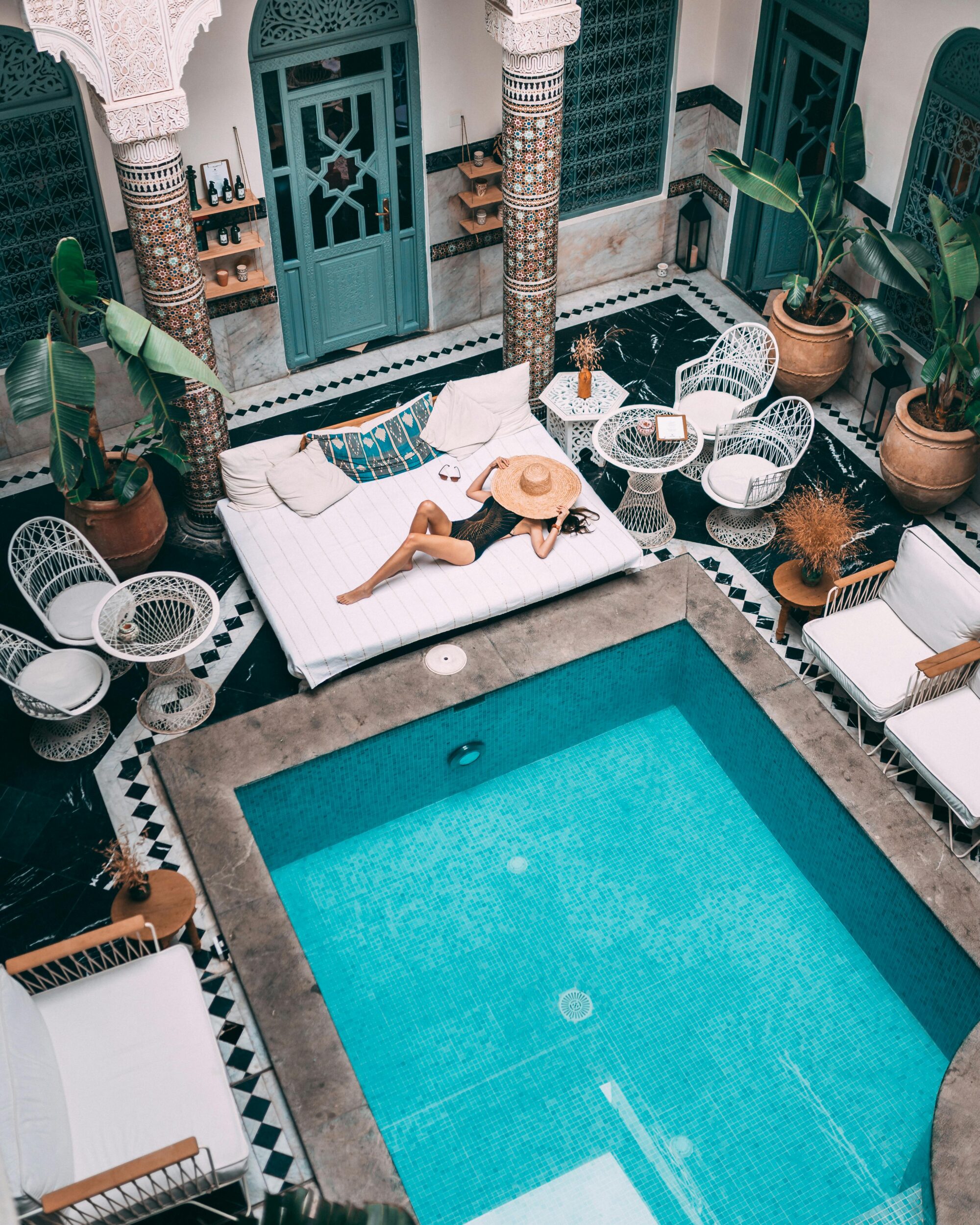
Marrakech itself is worth two or three days on either end of the trip. The medina is overwhelming in the best possible way — the souks are a sensory pile-up of leather tanneries, spice vendors, and silver workshops — and the food scene has expanded well beyond the tourist trail. Seek out the neighborhood restaurants around the Mellah (the old Jewish quarter) for lamb tagines that bear no resemblance to what you’d find on the Jemaa el-Fna.
A note: Ramadan dates shift year to year. In 2026, Ramadan is expected to begin in late February and run through late March. Traveling in Morocco during Ramadan is not a bad experience — in fact, the evenings during iftar (the breaking of the fast) are genuinely moving and generous — but some restaurants will be closed during daylight hours, and it’s worth knowing that before you go.
Portugal: Lisbon and the Alentejo Before the Crowds Land
The British and American tourists descend on Lisbon in force starting around May. In March, the city belongs mostly to locals, and that changes everything.
Lisbon is one of the few European capitals where you can still eat extremely well without reservation, walk into a neighborhood tasca at noon, and share a marble counter with a retiree eating bacalhau (salted cod) with boiled potatoes and drinking house wine from a ceramic cup. That experience disappears fast once peak season kicks in.
The city is hilly in a way that makes you work for every view, and the trams (particularly the famous 28E line through Alfama) are more useful for navigating steep grades than they are scenic rides, despite what the Instagram posts suggest. Go to Alfama on a Tuesday morning and walk down from the castle toward the river. Stop into any of the small grocery stores and pick up whatever looks interesting.
A two-hour drive east takes you into the Alentejo, which is Portugal’s great underrated region. Rolling plains of cork oaks, medieval walled towns like Évora and Monsaraz, and some of the country’s best wine — particularly the structured reds from around Reguengos de Monsaraz. March is shoulder season here too, and the landscape turns green and blooming. It’s cork country: the trees are stripped every nine years, and the red-exposed trunks look like they’ve been peeled to reveal something living underneath.
Costa Rica: Dry Season’s Last Good Month
The Pacific coast of Costa Rica runs a dry season from roughly December through April, and March is the last truly reliable month before things get unpredictable. The Guanacaste region — Tamarindo, Nosara, the Nicoya Peninsula — is warm, sunny, and at its most accessible.
But the better reason to go in March is that the jungle is still accessible without the mud season misery, and the wildlife is extraordinary. Leatherback sea turtles nest on the northern beaches. Scarlet macaws are everywhere in the lowlands around the Osa Peninsula. Manuel Antonio National Park, which is small but shockingly dense with wildlife, is full of white-faced capuchin monkeys, two and three-toed sloths, and green iguanas going about their business in full view of the trails.
The surfing on the Pacific side is consistent through March — beach breaks around Nosara and the points near Mal País suit everything from beginners to experienced surfers. And Costa Rica’s food scene has genuinely improved over the past decade; you’re no longer limited to gallo pinto and rice every meal, though honestly, gallo pinto made fresh in the morning with a good cup of local coffee is not something to skip.
Greece: Skip the Islands, Go to the Mainland
Everyone goes to Greece in summer. The islands are packed, the ferries are delayed, and a beer on a rooftop in Santorini now costs as much as a meal in most of the rest of Europe. In March, Greece is a different country.
The islands are mostly shut — many restaurants, hotels, and boat services don’t operate before late April. But the mainland is open and extraordinary. Athens in March is one of the better city experiences in Europe: the Acropolis without selfie sticks three inches from your face, the National Archaeological Museum at a pace where you can actually look at things, the neighborhood of Monastiraki with its flea market and street food still belonging to Athenians rather than tourists.
From Athens, the Peloponnese is a short drive and deserves more attention than it gets. The medieval Byzantine city of Mystras, a UNESCO site, sits ghostly and half-ruined on a hillside above Sparta. The ancient theater at Epidaurus is one of the most acoustically perfect structures ever built. And the town of Nafplio — the first capital of modern Greece — is compact, walkable, and beautiful in a way that feels genuinely earned rather than curated.
The weather in March is mild and occasionally rainy, but for sightseeing, a little overcast light is no hardship.
Rwanda: The Short Dry Season and the Gorillas
In East Africa, Rwanda gets two dry seasons: one short window in January and February, and the longer one from June through September. By March, some rain returns, but the short dry season bleeds into March often enough, and there’s a specific reason March deserves a mention: gorilla permits.
Rwanda’s mountain gorillas live in Volcanoes National Park in the northwest of the country, and the permits to track them — which put you face to face with a habituated family group for one hour — are expensive (currently around $1,500 per person) and limited. But in March, you have a better shot at getting them than in the peak June-to-September window, when demand from international travelers is at its highest.
The experience of sitting with a mountain gorilla family — watching a silverback yawn, watching juveniles wrestle over a branch — is genuinely one of those things that rearranges something in your understanding of the world. It’s not like any zoo experience. The gorillas ignore you with a kind of supreme, unembarrassed indifference that makes you feel like the guest you actually are.
Kigali, Rwanda’s capital, is also worth a day or two. It is remarkably clean, well-organized, and has a food and arts scene that has grown fast. The Kigali Genocide Memorial is somber and necessary.
A Few Honest Notes Before You Book
Flights: March is not peak season for most of these destinations, which means prices are generally lower than summer. Book eight to twelve weeks out for the best combination of availability and price.
Accommodation: In Japan, book earlier — cherry blossom season drives prices hard. Everywhere else, four to six weeks is usually fine outside of specific events.
Weather reality: March weather is shoulder season weather. That means some rain in Portugal, some clouds in Greece, some heat in Morocco. Pack a layer and stop expecting perfection.
What to skip: The social-media itinerary. You don’t need to see everything on the list. Go slower, eat more, talk to people. The best travel experiences in March — or any month — are usually unplanned.